(This was in regards to the April election, which was the Presidential primary and a host of local elections).
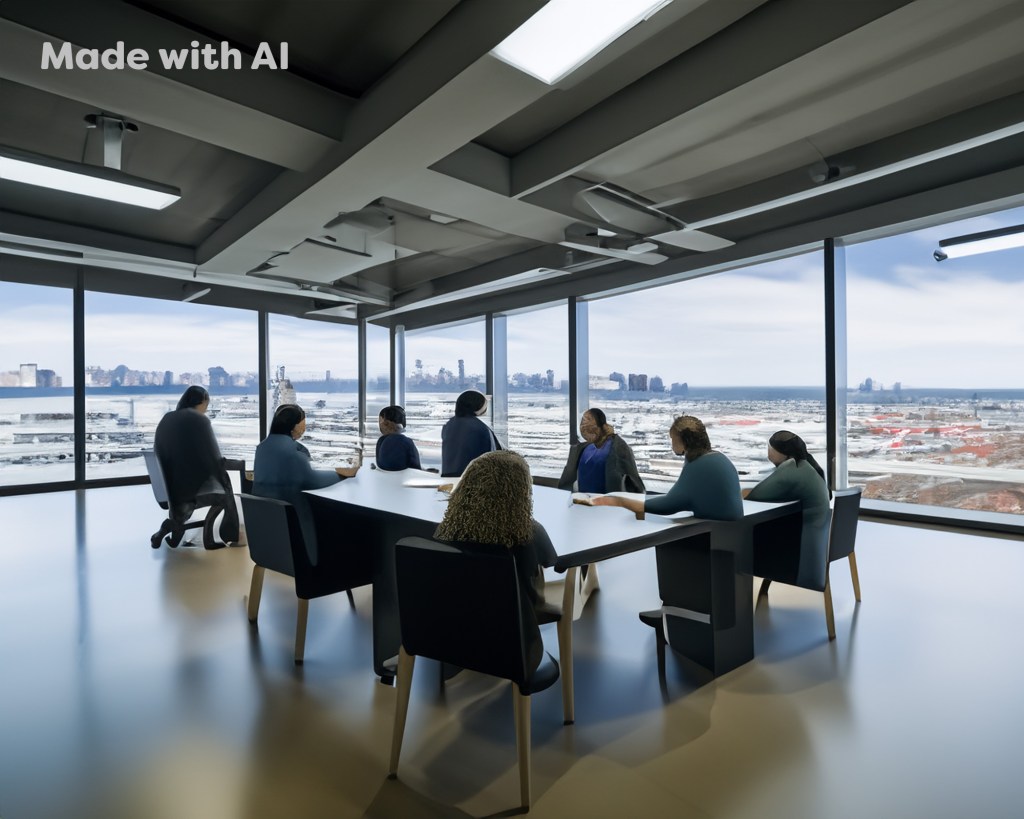
There isn’t an actual photo for this post because I wasn’t allowed to take any.*
Since 2020, I’ve served as a Poll Observer for the Wisconsin Democratic Party’s Voter Protection Program. It’s been a way that I could help out. I used to do some canvassing each election cycle, but I’ve been—I’m sad to admit it—uncomfortable doing it. Particularly after 2016. I could tell the week prior to Election Day ’16 that something was happening. The energy was off. I’d go to the doors of people who had been Democratic voters in the past and I’d find some very cagey people. Negative responses ranged from, “Well, we’ll just have to see what happens…” to, “Get the hell off my property.” The civility that used to be the norm was already slipping. In 2018, it was even worse. It felt threatening at times. So, I switched to phone banking. When that began to feel a bit confrontational, I found poll observing to be a salutary way to stay involved with the electoral process.
So, what is poll observing? That’s a great question without a single answer. If you’re on the “blue team,**” it means that you’re watching the personnel at the polling place, making sure procedures are being followed, that signage is visible, that curbside voting drop-offs are well designed, etc. You’re also watching the poll observers from the “red team.” The whole point is to make sure that 100% of the voters who come to vote are able to vote.
You’re keeping your eyes open for obstacles so that you can call them out. As a poll observer, you’re on the front line reporting to a room full of lawyers and other professionals trained in election law. We’re trained to help people without regard for their partisan preference, if you can even discern it. If you’re on the red team, however, you’re hoping to deny certain people the vote, so you’re watching the voters. One lady from the red team that I shared an observation area would stand whenever people of color would enter the room and follow them around as best she could. She was the most obvious, but they all noticeably tense up when Latino and Asian immigrants, POC, and LGBTQ+ people enter the room. I would love to see their training manual.
For the most part, conversations with the opposition have been cordial. People face-to-face, at least in Wisconsin, are somewhat tempered by the expectations of civil society. I do always get the sense though that have a bit of a smirk. This may just be me, but in 2024 it’s the blue team that’s fighting to preserve the status quo. We’ve become the conservatives. We want to protect the progress that we’ve made over the course of the past century and keep bending that arc towards justice. It’s the red team that’s become revolutionary. They’ve gone from being people misguided about tax policy to people who believe modernity was a mistake. I’m always worried that they’re thinking, “Buddy, we won’t have to put up with people like you much longer.” That probably sounds a little paranoid, but I don’t really think it is.
In the years that I’ve done this, nothing major has happened. A polling station ran out of ballots and some people had to wait an extra 10 minutes. Duly reported. Honestly, that’s the only example I can recall. In poll observing, no news is good news. The reality is that elections in Green Bay are run very well by poll workers who step up, care, and take things very seriously. It’s an extremely long day—most poll workers are there from 12-14 hours, there aren’t enough for multiple shifts—and not a lot of money considering. They’re there for the right reasons. One poll observer (from the red team) told me that all of the rhetoric about ‘a stolen election’ had prepared her for something very different than watching very dutiful citizens performing procedures very dutifully. I told her this was the real world.
Most recently, I was ‘promoted’ to the Central Count location for the April election. During Election Day, Central Count is where you’ll find poll workers processing and tabulating absentee ballots. The envelope is checked for address, witness signature, etc. The ballot is removed and then eventually fed through ballot counting machines. Poll workers handle the ballots and envelopes. The votes are then tabulated by city employees. The role of the poll observer is mostly just to make sure that everything’s working smoothly. On occasion there is an issue with the envelope. Maybe the voter forgot to sign the thing, or there’s a small tear in the corner. These are inspected. If they’re ‘curable,’ they’re set aside. Voters have until the end of Election Day to correct any mistakes. Part of what I do is to send information about these curable ballots back my team so that they can attempt to contact the voter. Note that this is done without regard to who that voter may be or whom it can be presumed they vote for. This past April, in the City of Green Bay there were only a handful of these and all of them were fixed. Every vote got counted.
Poll observing will make you feel better about the democratic process. You should sign up.
* As a side note, graphic generating AI continues to not be something I would willingly pay for. Adobe recently incorporated AI into Photoshop, Illustrator, and presumably other programs in the Creative Suite. It’s difficult to avoid. You can barely click the screen without the software offering to generate something. A lot of software is like that now, WordPress—which is what I’m using right now—included. So far, none of this new “functionality” has increased the cost of these services. Which is good, because as far as I can tell, they don’t have any value.
Anyway, since I couldn’t take a photo for this post, I thought I might be able to create an approximation of what I saw at Central Count using AI. Here was my prompt:
“A wide angle photo shows an office environment with a drop ceiling and fluorescent light fixtures. There are folding tables along the wall, each perpendicular to the wall. In the wall there are several windows with views of downtown Green Bay. Each table has 2 pairs of people examining ballots. The people are a mix of races and ages.”
I worked through a series of variants and finally gave up and resigned myself to the image you see above. Adobe’s ads, by the way, don’t hint at all at the bizarreness of their product’s offerings. The ads, which are everywhere I look, want you to believe this is useful. For the record, that’s not at all what Downtown Green Bay looks like.
** Should be obvious what I mean by blue team and red team. I say ‘red team’ because they never identify themselves on the sign-in sheets, so I’m left to pick up on other cues. Like a notebook with “Heritage Foundation” branding, or Phyllis Schlafly haircuts (no exaggeration).
 Alex Galt
Leave a comment